Address ventilation/temperature control in battery room.
- Improper charging profile or charger not compatible with chemistry/voltage.
- Lack of preventive monitoring and maintenance; Late detection of capacity loss.
- Leaving non-critical consumers during backup and increasing the depth of battery discharge.
Daily operation checklist
- Weekly recording of key data (voltage, temperature, events).
- Monthly review of actual DoD and comparison with target range.
- Periodic impedance/controlled discharge testing.
- 400;”>Seasonal review of battery room ventilation and hot spots.
- Review charge profile after any change in load/environment.
- Define automatic shutdown procedure for non-critical loads during backup.
Frequently Asked Questions
1) How is battery depth of discharge different from SoC?
DoD is the percentage of capacity consumed in a cycle and SoC is the percentage of charge remaining; Their total is almost 100%.
2) Is a full discharge (100% DoD) harmful to the battery?
Yes; Deep discharges increase the likelihood of sulfation and reduced cycle life and should be limited to emergency situations.
3) What is the most appropriate range for sensitive UPSs?
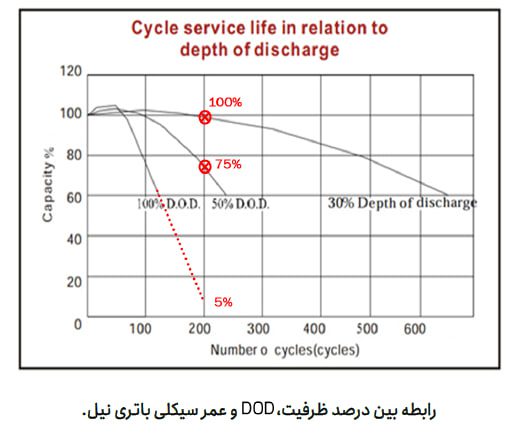
A shallow DoD (around 20–30%) usually significantly increases cycle life and reliability.
Summary: By managing the depth of discharge of the battery, you can extend the useful life of the battery bank and control maintenance costs.
To select the appropriate capacity and charging settings, use Our Technical Team Consult
The depth of discharge (DoD) of a battery is one of the most important factors affecting the cycle life and reliability of lead-acid battery banks. The deeper the DoD, the greater the mechanical and electrochemical stress on the plates and the shorter the useful life. In this article, we review the concept of DoD, its impact on life, recommended scenarios, and practical methods for reducing battery depth of discharge.
If you want to reduce maintenance costs and increase the stability of backup power (UPS/Telecom), understanding and managing battery depth of discharge is essential.
What is battery depth of discharge and how is it different from SoC?
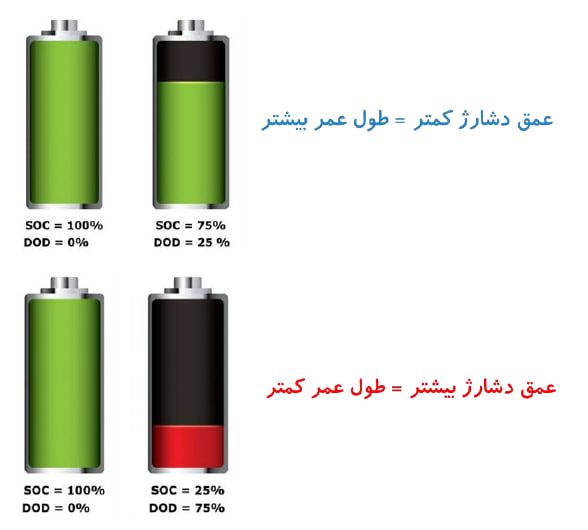
Depth of Discharge | DoD is the percentage of capacity used in a cycle. For example, if 30% of the capacity is used, shallow discharge has occurred; ranges from 70 to 100% are considered “deep discharge” and accelerate wear. SoC, or state of charge, is the percentage of charge remaining; The sum of DoD and SoC is usually 100% (e.g. DoD=30% ⇔ SoC≈70%).
Mechanism of DoD’s effect on battery life
As the depth of discharge increases, the following events intensify: sulfation of the plates and loss of capacity, breakdown/restructuring of active materials, increased thermal stress, and greater stress on the electrolyte and separators. Practical result: the higher the DoD, the shorter the cycle life.
Complementary factors besides DoD (Why is DoD alone not enough?)
- Temperature: Higher temperatures accelerate chemical erosion; Temperature control complements DoD management.
- Charge profile: Following Float/Boost/Equalize according to the datasheet prevents sulfation.
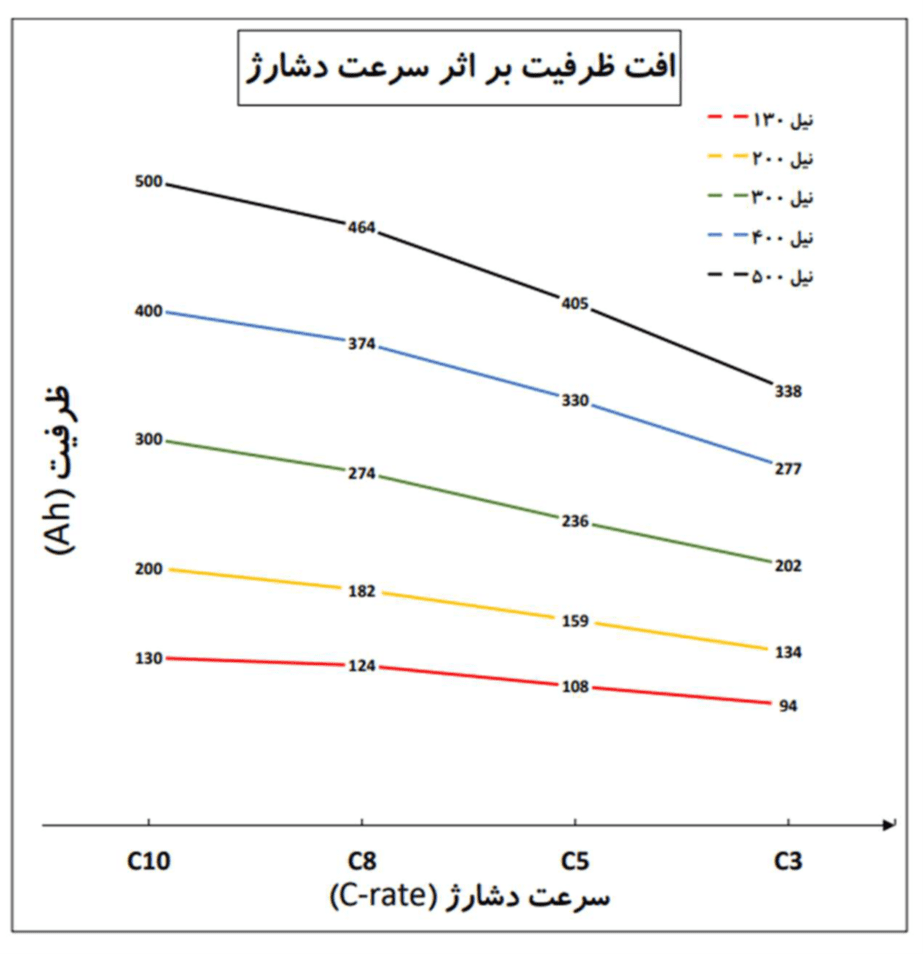
- Discharge rate (C-rate): Higher currents cause more voltage drop and stress.
- Battery quality/age: Older or poor quality batteries will have a shorter lifespan at the same DoD.
- Improper sizing: Insufficient capacity will unintentionally increase operational DoD.
DoD recommended operating ranges and scenarios
The ranges below are a practical framework to start with; Match the exact value to the datasheet, temperature, charging profile and load type.
| Scenario | Recommended DoD range | Explanation |
|---|---|---|
| Standby/Critical UPS | 20–30% | Maximizing the life and reliability of critical systems |
| Telecom/Resident Bank | 30–50% | Balance between usable capacity and durability |
| Emergency/Deep Discharge | 70–100% | Only in special circumstances; continuity reduces life |
6 effective ways to reduce battery depth of discharge
- Sizing with a margin of safety: Select the bank capacity so that the operational DoD remains within the target range (shallow).
- Correct charging profile (Float/Boost/Equalize): According to the manufacturer’s datasheet; improper charging exacerbates sulfate and capacity loss.
- Battery health monitoring (Monitoring): Record cell voltage, internal resistance and temperature periodically.
- Battery room temperature control and ventilation: High temperatures accelerate chemical degradation; Temperature sensors and alarms are useful.
- Operator training and load shedding procedures: Avoid unplanned and deep discharges; disconnect non-critical loads in backup.
- Periodic service and testing: Scheduled discharge/impedance testing for early detection of capacity loss.
Common mistakes that unnecessarily increase DoD
- A